





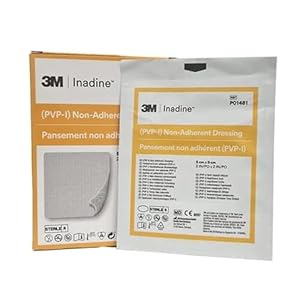
Drugstore wound dressing, the Inadine Non-Adherent Wound Dressings, uses slow-release antiseptic action to reduce microbial load and ease dressing changes. For carers and first-aid kit owners, less painful dressing changes bring reassurance and simpler aftercare. Are povidone-iodine infused, compact dressings the most practical option for small cuts and burns?
⚡ At a Glance
- • Antimicrobial Protection: Slow-release iodine helps reduce microbial load in the wound
- • Best for: Minor burns, cuts, ulcers, surgical wounds, pressure sores and infected wounds
- • Not ideal for: Large or heavily exuding wounds that need high-absorbency dressings
Povidone-iodine 10% is impregnated into a non-adherent knitted viscose contact layer, supplied sterile and individually wrapped. Colour change indicator fades from brown to white as iodine is used up, signalling when a change is due.
Reduced infection risk - with 10% povidone-iodine slow-release action
Povidone-iodine is embedded in the dressing and releases free iodine gradually into the wound environment, exerting broad antimicrobial activity. Slow release maintains local antiseptic effect without repeated application of liquid antiseptics.
Gradual iodine release helps lower microbial load at the wound site, supporting cleaner healing. Visual evidence of antiseptic use helps carers judge when to replace a dressing.
Gentle dressing changes - with non-adherent knitted viscose contact layer
Knitted viscose forms a soft, non-adherent contact layer that does not bond to granulating tissue. The fabric structure lets exudate pass into secondary dressings while avoiding trauma on removal.
Reduced sticking minimises pain and tissue disruption during changes, useful for sensitive areas and frequent dressing routines. Easier removal also helps maintain wound bed integrity.
Know when to change dressings - with a brown-to-white colour indicator
Iodine content gives the dressing a brown colour which fades as iodine is depleted, creating a visual cue. Colour change occurs as antiseptic action reduces, signalling reduced active iodine.
Simple visual monitoring removes guesswork and supports timely dressing changes, helping avoid under- or over-changing. Particularly helpful in busy first-aid scenarios and community care.
✨ The 4 Key Reasons for Inadine Non-Adherent Wound Dressings
Non-adherent knitted viscose - Reduces pain and tissue trauma during dressing changes
Sterile, individually wrapped - Maintains hygienic supply ready for immediate use in kits
Colour change indicator - Gives a clear visual cue when dressing needs replacing
Compact 5cm x 5cm size - Conforms to fingers, heels and elbows, ideal for awkward areas
📋 Technical Details at a Glance
- Category: Drugstore - Wound Dressing
- Brand: Inadine
- Size: 5 cm x 5 cm
- Antimicrobial agent: Povidone-Iodine
- Concentration: 10% Povidone-Iodine
❓ Frequently Asked Questions
Q: How does the dressing reduce infection risk?
A: Povidone-iodine is impregnated at 10%, releasing iodine slowly to help reduce microbial load in the wound bed.
Q: Will the dressing stick to the wound?
A: Non-adherent knitted viscose serves as the contact layer, designed to prevent sticking and reduce pain during dressing changes.
Q: How can a user tell when the dressing needs changing?
A: A colour change indicator fades from brown to white as iodine is used up, offering a clear visual cue for replacement.
🏆 Our Verdict
Suitable for carers, first-aid kit owners and clinical staff who need compact antimicrobial dressings for small or awkward wounds. Slow-release povidone-iodine combined with a non-adherent knitted viscose contact layer and a clear colour change indicator is the main advantage. Stocking sterile, individually wrapped dressings delivers long-term practical value for home and clinical first-aid needs.
