





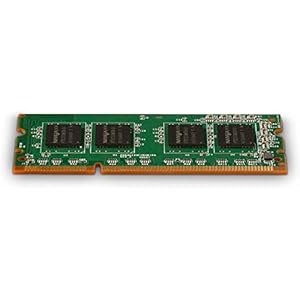
Personal computer memory aimed at straightforward upgrades for legacy systems. Keeps ageing laptops usable for everyday web browsing and office work. Is the HP 2GB DDR3 SODIMM still relevant for today's needs?
⚡ At a Glance
- • Memory Specification: DDR3, 2GB capacity, 144-pin SODIMM, 800MHz
- • Best for: Owners of older laptops and compact systems needing a simple memory boost
- • Not ideal for: Modern machines that require DDR4 or DDR5 modules
Compact 2GB DDR3 memory in a 144-pin SODIMM format operating at 800MHz. Suitable for basic performance upgrades on compatible legacy systems.
Keeps older systems responsive – with 800MHz DDR3 memory
DDR3 running at 800MHz supplies steady data transfer rates for legacy platforms, with x32 organisation indicating a 32-bit data width per cycle. The module matches the timing and signalling conventions used by many older laptop memory controllers.
Noticeable improvement for everyday tasks such as web browsing and document editing on compatible machines. A straightforward way to revive sluggish systems that accept 144-pin DDR3 SODIMM modules.
Compact installation – thanks to 144-pin SODIMM form factor
SODIMM uses a smaller printed circuit board and a 144-pin edge connector tailored to laptop slots and compact boards. The low-profile design reduces clearance issues inside tight chassis.
Fits confined laptop interiors where full-size DIMMs cannot be used, making upgrades possible without case modification. Suitable for technicians and home users who need a neat, space-efficient replacement.
Maintains OEM compatibility – with OEM HP part designation
OEM HP part labelling signifies production or specification for HP systems, aligning form, fit and labelling with manufacturer service parts. Identification eases matching during repairs and replacements.
Eases sourcing of matching components for service and repair work on HP-maintained machines. Offers reassurance when replacing memory in systems that follow HP parts lists.
✨ The 4 Key Reasons for HP 2GB DDR3 SODIMM
- OEM HP part – Ensures original-spec fit with compatible HP systems and predictable replacement
- Compact profile – Installs in confined laptop interiors without clearance or fit issues
- Simple swap-in – Enables quick memory upgrades requiring only physical installation
- Supports legacy systems – Suitable for machines that specifically require DDR3 800MHz modules for stability
📋 Technical Details at a Glance
- Category: Personal Computer memory
- Module type: SODIMM
- Capacity: 2GB
- Memory standard: DDR3
- Speed: 800MHz
❓ Frequently Asked Questions
Q: Will this fit my laptop?
A: If the laptop requires a 144-pin DDR3 SODIMM module, the module will be mechanically compatible; confirm slot type in system documentation before purchasing.
Q: Can this memory be used in desktops?
A: SODIMM modules are commonly used in laptops and compact all-in-one systems; full-size desktop DIMM slots are not compatible with 144-pin SODIMM modules.
Q: Is DDR3 compatible with DDR4 or DDR5 systems?
A: No, DDR3 modules are not compatible with DDR4 or DDR5 slots, so matching the memory standard to the motherboard is essential.
🏆 Our Verdict
The HP 2GB DDR3 SODIMM suits users maintaining older HP laptops or compact systems that accept 144-pin DDR3 modules. OEM-spec labelling and 800MHz operation make it a practical, low-risk option for basic memory upgrades. Reliable operation across the lifetime of the host device offers sensible long-term value for machines kept in regular use.
