





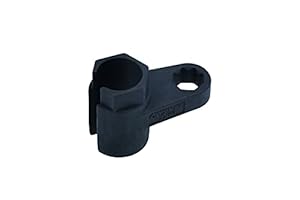
Automotive parts and accessories tool designed to remove oxygen (lambda) sensors using a short 75mm socket for tight engine bays. Having the right socket reduces stress and time when tackling seized sensors during roadside repairs or in the workshop. Is Laser Oxygen Sensor Socket a worthwhile addition to a mechanic's toolkit?
⚡ At a Glance
- • Access and Fit: Short 75mm length reaches confined engine spaces and fits 22mm single hex lambda sensors
- • Best for: Mechanics and home enthusiasts needing to remove or replace 22mm oxygen sensors
- • Not ideal for: Sensors that do not use a 22mm single hex or require larger specialised tools
Short-series 75mm socket suits 22mm single hex lambda sensors and accepts 1/2" square drive or a 30mm spanner. Chrome molybdenum construction with a black phosphate finish enhances strength and corrosion resistance.
Reach confined engine bays - with 75mm short series length
Short series length of 75mm reduces interference from surrounding components when accessing oxygen sensors located deep in tight engine areas. Narrow profile avoids the need to remove nearby parts before gaining access.
Access hard-to-reach sensors without dismantling adjacent components, saving time during removal or replacement.
Apply higher torque when needed - with 1/2" drive and open-wrench compatibility
Combination of an open wrench slot and a 1/2" drive allows use with ratchets for leverage or a spanner where a ratchet cannot fit. The design transfers increased torque to the 22mm hex for breaking seized fittings.
Extra leverage helps free stubborn oxygen sensors more reliably while reducing the risk of rounding the hex head.
Built to last in workshops - with chrome molybdenum and black phosphate finish
Manufactured from chrome molybdenum for toughness and heat resistance, finished in black phosphate to improve corrosion resistance and surface durability. Material choice suits repeated high-torque use near heat sources.
Durable construction withstands workshop conditions and frequent use, delivering a longer service life than lower-grade sockets.
✨ The 4 Key Reasons for Laser Oxygen Sensor Socket
- 22mm single hex fit - Precise engagement prevents slipping and speeds sensor removal
- Short 75mm series - Reach confined engine bay spots without dismantling nearby components
- 1/2" drive and open wrench combo - Apply higher torque with ratchet or spanner as required
- Chrome molybdenum construction - Withstands workshop torque and resists corrosion over time
📋 Technical Details at a Glance
- Category: Automotive Parts and Accessories
- Brand: Laser
- Model / Type: Oxygen Sensor Socket
- Product ID: B0922WCY9P
- Length: 75mm (short series)
❓ Frequently Asked Questions
Q: Which oxygen sensors will this socket fit?
A: Fits 22mm single hex lambda (oxygen) sensors as specified in the product description.
Q: Can a spanner be used instead of a ratchet?
A: Yes, the socket can be driven by 1/2" square socketry or a 30mm spanner depending on access.
Q: Is the socket effective on seized sensors?
A: User feedback indicates the design helps remove stubborn or seized oxygen sensors quickly when used with suitable lubrication and torque.
🏆 Our Verdict
Suitable for mechanics and home DIYers who regularly remove or replace 22mm oxygen sensors. The combination of a short 75mm series length, 1/2" drive compatibility and durable chrome molybdenum construction makes reaching and freeing seized sensors more straightforward. Strong materials and practical drive options suggest good long-term value for workshop use.
